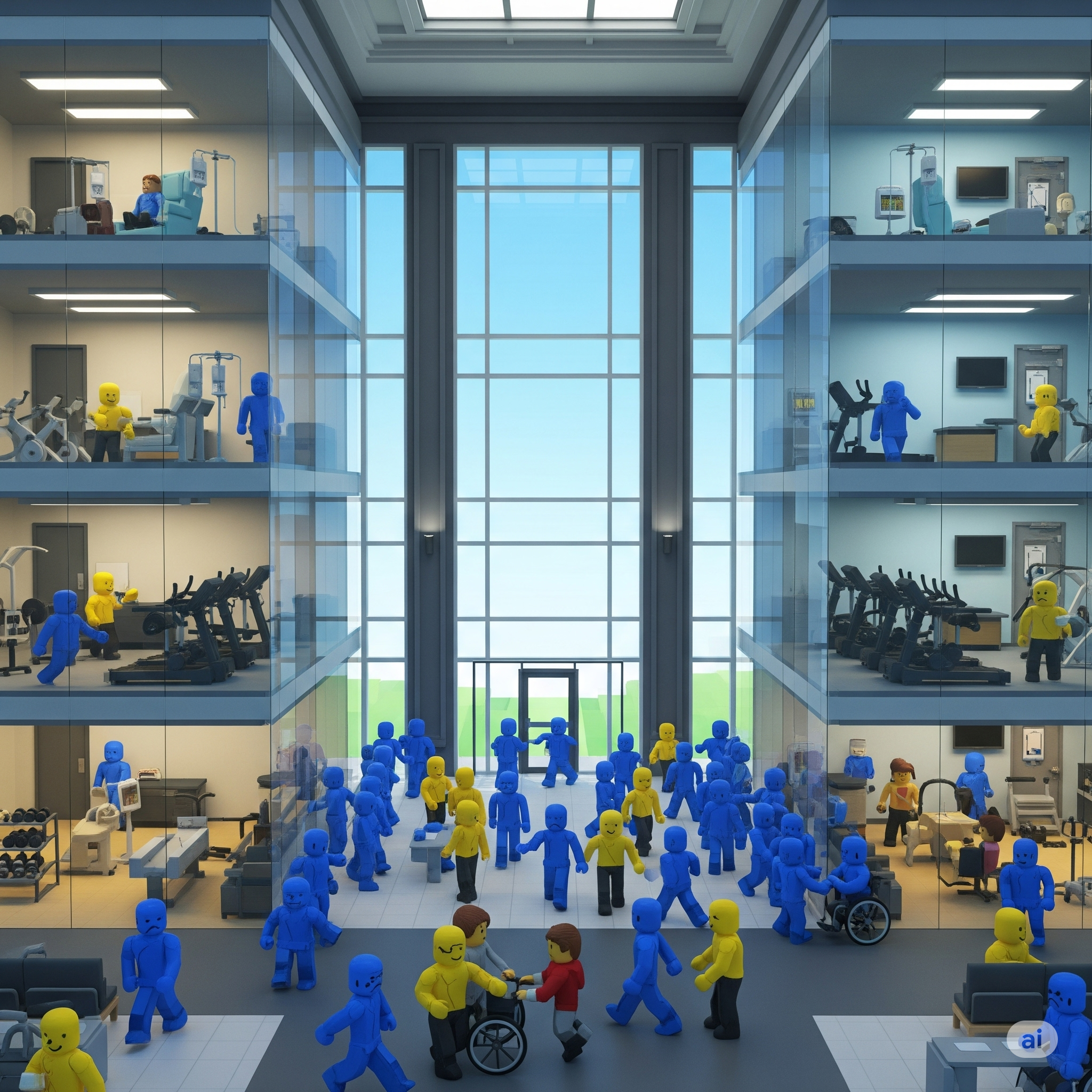
Above is an integrative oncology cancer center, figuratively (“Yellow” by Coldplay live in Sao Paulo Brazil).
Below, is a Gemini AI-generated image symbolic of a typical NCI-designated academic cancer center. The characters in blue are those who are vitamin D deficient (and most likely do not realize it), and those in yellow are those who are vitamin D adequate in the United States (only 29.7%). >95% of these patients in blue are about to start anti-cancer therapy without having their vitamin D checked and replaced if low. Screening for this deficiency is NOT standard of care at academic cancer centers. Yet the research suggests neutral-to-positive effects on cancer mortality (despite being of “amateur hour” intervention quality) and large effect sizes on quality of life, particularly fatigue when dosed correctly. Improving fatigue is important to even consider engagement with healthier lifestyles. Baseline fatigue is a well known major risk factor to not be capable of it.

A vitamin D deficiency is one of the easiest causes of fatigue to treat, but most conventional doctors do not know how to do it correctly in 2025. With sufficient doses, 65% improvement of fatigue can be expected within a week of treatment (caution: this is probably useless for those already above 30 ng/ml so please check your blood D25 test before guessing correct dose). Technically, people can do this for themselves without a doctor using over-the-counter D3 supplements (USP certified preferred), but let’s spread the word about vitamin D so physicians can help people do this safely.
Please like or share with colleagues and loved ones if you agree this should be standard of care at all cancer centers. I know some of you might have consequences from engaging with this post, so nothing personal to me if you don’t engage with it. The main thing is to start the clinical “practice” of doing it, and see the evidence in the patients you take care of, or even better for yourself if you are low.
If you want to know all the evidence to support the above statements, check out my 3 new blogs posted over the past week here on my wordpress website. The very first blog includes a link to a free chapter (.pdf) I wrote for any institution or university to offer students, clinical trainees, residents as an essential tool for personal wellness (as you’re about to institutionalize them for a decade and those at highest risk for severe deficiency are people aged 10-30 years old, exactly those who are about to be exposed to Epstein-Barr (no not those two) virus, with 5 review questions at the end to make sure the essential knowledge is understood. Vitamin D3 is a weight based drug. It hasn’t been studied like one. D3 metabolite 1,25D is an essential hormone for wellness for all sentient beings on this planet.
The BLOGS (in summary for those reading this first and want quickie notes):
 First, I propose ASCO (and NCCN) lead the charge. It should be standard of care for all cancer centers to screen for a vitamin D deficiency before starting conventional treatment. I share in that blog, the link to my free downloadable chapter about vitamin D essentials for clinicians and patients. It covers what it does and how effective it can be for symptoms like fatigue, insomnia, and foggy brain in those who are deficient. The chapter also explains how to measure and address it, so we all have the freedom to treat it ourselves.
The second blog is about how the randomized-controlled trials (RCTs docs call them) of D3 therapy of the past are heavily flawed and over-interpreted as to their clinical meaning in a patient with a known deficiency, and how no one should take them seriously for personalized vitamin D3 replacement therapy. The only thing these RCTs have proven is that indiscriminate low dose supplementation of general populations suck. None of these RCT’s offered scientific doses based on baseline D25 and patient weight, which is the gold standard until proven otherwise for individualized vitamin D replacement therapy. This led to low doses that would not help those with a lot of weight or very low D25 levels, the very ones who would stand to benefit the most.
Third and latest blog is about how integrative oncologists know vitamin D effects on fatigue are not placebo effects including reviewing a positive double-blinded (the gold standard for RCT quality) randomized controlled study and taking a deeper dive into EViDiF (Roy 2014) study to illustrate how high D3 doses you might have to give to be accurate/scientific at vitamin D replacement therapy (spoiler: as high as 20,000 to 25,000 IU/d) to really see the clinical benefit in your practice, and THIS is why it has become until now, a major “blind spot” for amazing and incredibly brilliant (more than me) talent in academia.
I am an academic breast oncologist providing cutting edge integrative breast cancer care in the Chicago-land area. Thanks for your support! Spread the word in the communities. Less important than the likes is that we get everyone yellow and prevent disease, cancer and unnecessary fatigue so we can all live our best life possible.
So just like Coldplay sings to the world – Time to #getyellow folks! And with no irony, it is an Asian American telling you this.

A glacier cave in Mendenhall Alaska. It’s big, beautiful and blue, but be yellow.
Leave a Reply